
Foundation Program Sites

The CBDR—A Data Registry
By Midwives, For Midwives

The CBDR Leadership Team


Melissa Cheyney, PhD, LDM
Clinical Co-Director

Melissa Cheyney PhD, LDM is a Distinguished Professor of Clinical Medical Anthropology at Oregon State University (OSU) and a community midwife (on sabbatical). She co-directs Uplift—a research and reproductive equity laboratory at OSU, where she serves as the Primary Investigator on more than 20 maternal and infant health related research projects, has received Oregon State University’s prestigious Scholarship Impact Award for her work in the International Reproductive Health Laboratory and with the Midwives Alliance of North America (MANA) Statistics Project, and is the Editor-in-Chief of the journal Birth: Issues in Perinatal Care and the mother of a daughter born at home.

Marit Bovbjerg, PhD, MS
Clinical Co-Director

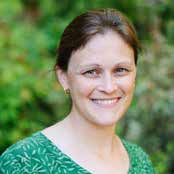
Marit Bovbjerg, PhD, MS, is an associate professor of epidemiology at Oregon State University whose research has shaped national policy on maternity care. Her main research interest is maternity care in the US, with a focus on midwifery care and planned community birth. Dr. Bovbjerg was the lead author on recent papers that have led to changes in national health policy and changes in reproductive epidemiology standard research methods. She is a quantitative methods expert for the Uplift Lab research group, and works extensively with Dr. Cheyney, Uplift collaborators, and colleagues around the world on projects related to maternity care. During the 2019-2020 academic year, she was a Fulbright Scholar, appointed at the National Perinatal Epidemiology Centre, University College Cork, Ireland.

Akane Sugimoto Storey
Program Manager

A trained midwife, former birth center director, and the parent of two children born at home in Chiapas, Mexico, Akane has spent the past 15 years working alongside midwives and birth workers to expand access to culturally safe, respectful perinatal care, both in the U.S. and internationally. Her work is grounded in cultural sovereignty, local determination, gender equity, and human rights. Akane is currently completing her Doctor of Global Health at the University of Washington. As CBDR Program Manager, Akane is here to make sure you feel supported, whether you’re onboarding, navigating the system, or working to make the most of your data.

Birth Data, Reimagined

Created by midwives for midwives, the CBDR database is a comprehensive source of birth data unlike any other in the United States.

Because it aligns closely with the hospital birth-focused OB COAP database with a number of cross-registry fields, the CBDR allows direct comparisons of risk profile, outcome, and process measures across all birth settings and all provider types.

Midwives entering data in the CBDR can access their own data at any time and will receive annual reports from FHCQ comparing their own data to aggregated data of other community midwives for benchmarking.

These reports will also compare all community birth outcome data to data from participating OB COAP hospitals.

How is the Data Used & Who Can Access the Data?

WA State Department of Health has designated the CBDR as an approved state research organization. In accordance with WAC 246-834-370, data from the CBDR will NOT be submitted to the Department. If a midwife gets audited by the DOH during the licensure renewal process, the FHCQ will provide verification only of the midwife’s participation in data collection, as required by law.

Aggregated data will be shared with both professional midwifery organizations (MAWS and WARM)to help identify opportunities for continuing education and upskilling. This data may also be shared at the annual OB COAP meetings, inviting inquiry about how community birth practices could improve outcomes for low-risk childbearing people giving birth in hospitals. In addition, Smooth Transitions participants will be able to jointly review data on hospital transfers from planned community births.

Funding for the CBDR

The CBDR is supported by a three-year grant from the Skyline Foundation, awarded in 2025. The Skyline Foundation funds initiatives that address the root causes of societal challenges, with Birth Justice as a central focus. This support helps the CBDR strengthen community-based midwifery and expand access to meaningful, equity-driven data that improves care for families.

Read this recent article from the Skyline Foundation’s Birth Justice Program Lead, Tanya Taiwo, about the critical importance of community birth data.

Contribute to the Future of Community Birth

Join CBDR

History of the CBDR

Pilot Washington State Data Collection Launch

  • OB COAP launched in 2010 as a pilot project capturing births across all settings, with data from five hospitals and MAWS members, eventually totaling over 14,000 records.
  • From the start, the OB COAP Management Committee included licensed midwives.
  • Data submission to an approved DOH research organization became mandatory in 2014 for licensed Washington midwives as a condition of licensure renewal.

CBDR Vision Emerges

  • The Midwives Alliance of Washington State (MAWS) Data and Research Committee and the Smooth Transitions Leadership Team recognized the need for a long-term solution to meeting the data collection needs of the LM community beyond Washington State.
  • Together in 2018, they began drafting the plan for the Community Birth Data Registry (CBDR) at the FHCQ—a non-profit, neutral entity that houses OB COAP and Smooth Transitions.

First CBDR-Study Highlights Excellent Outcomes

CBDR Welcomes Midwives Across US

  • A group of community midwives, along with leadership from FHCQ, worked together to create, test, and launch the CBDR in 2021.