- FHCQ Foundation for Health Care Quality
- COAP Care Outcomes Assessment Program
- Spine COAP Care Outcomes Assessment Program
- SCOAP Care Outcomes Assessment Program
- OBCOAP Care Outcomes Assessment Program
- CBDR Community Birth Data Registry
- Smooth Transitions Smooth Transitions
- WPSC Patient Safety Coalition
- Bree Collaborative Bree Collaborative
- Health Equity Health Equity
- Admin Simp Administrative Simplification
- Contact Us



New clinical workflow to decrease disparities in Diabetes
New clinical workflow to decrease disparities in Diabetes
Beacon, June 9th, 2026
A1c measures are not always easy to get. Patients need to get lab work done, which can be time consuming for patients, requiring transportation and time to get to a testing site. A1c is a average over time; it reflects average blood sugar over the past 2–3 months, which doesn’t support real-time clinical decision making. However the advent of new technologies such as Continuous Glucose Monitors (CGM) have revolutionized the way that patients with Diabetes can monitor their blood sugar. Yet the problem still exists of how best to leverage this data in a clinical setting.
In 2024, as part of the Bree’s Health Equity Action Collaborative, Confluence Health began thinking about how to address higher rates of uncontrolled HbA1c among Hispanic, American Indian/Alaska Native, and African American patients. Their project focused first on the feasibility of using new ways of addressing HbA1c control, including attempting to optimize the prescribing of CGMs for patients of color and improving care processes for those with uncontrolled A1c.
They began by creating an intervention to use CGM data and other information effectively in clinical care, including identifying eligible patients through chart review and providing prescribing support to clinicians. As part of their intervention Dr. Kathryn Eren, at Confluence’s East Wenatchee Family Medicine, created a workflow for downloading and using CGM data in a clinical setting. The workflow consisted of a minor investment in two desktop computers for the clinic to enable downloading of continuous glucose sensor readers and a time investment in training staff and providers to use the new download capabilities.
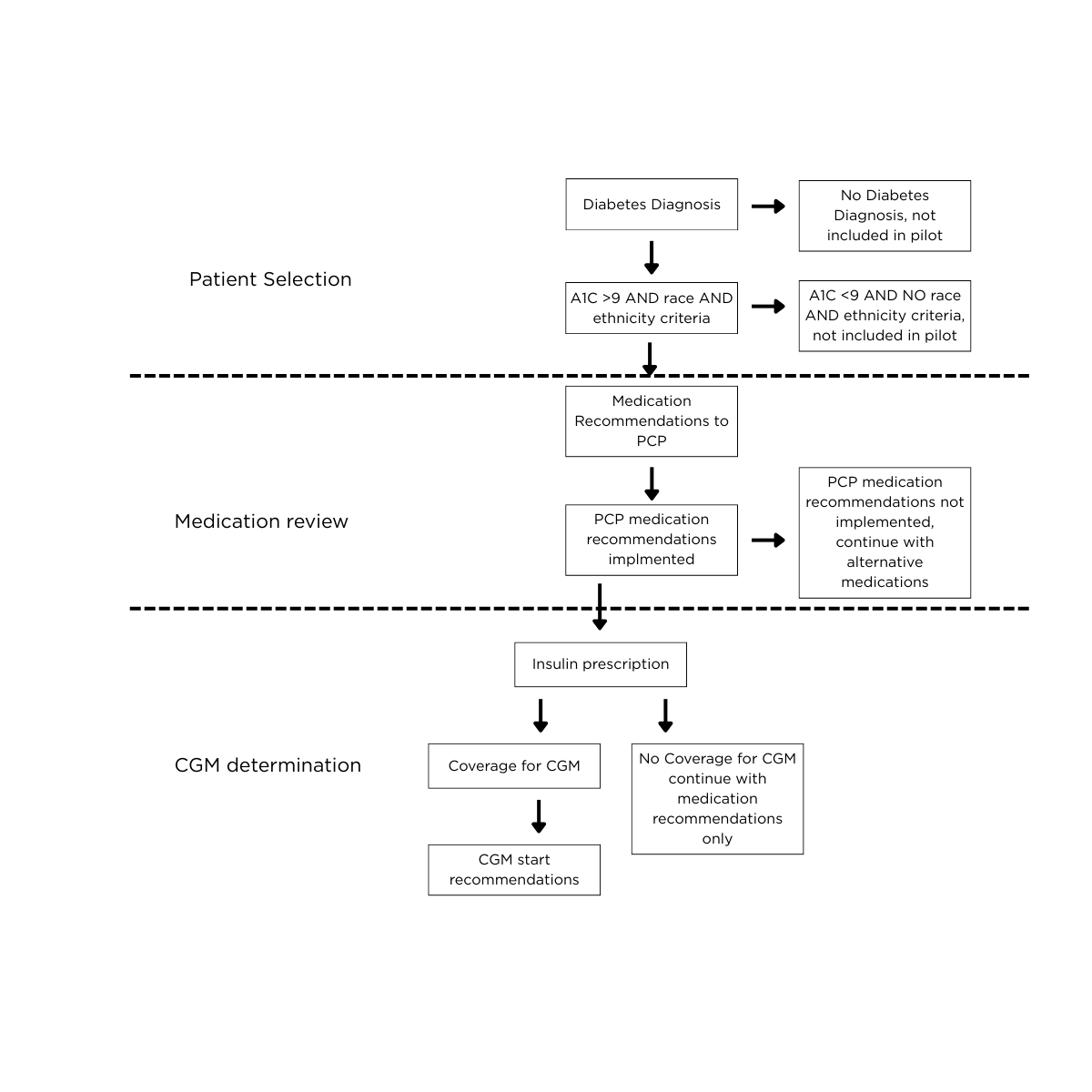
East Wenatchee clinic conducted a successful implementation of the new workflow with 70% of providers at the East Wenatchee Clinic implementing the new workflow. Wenatchee Clinic also
saw reductions in uncontrolled diabetes among the intervention target populations of -2.3% in spite of overall increases in uncontrolled diabetes for all patients at Confluence as a whole. This test provided evidence for the feasibility of using CGM data in the clinic and demonstrated promising results from the use of new technologies.
CALL TO ACTION: The use of new technologies to address high rates of uncontrolled A1c and disparities in control is more important than ever. The resources provided by Confluence here are open-source and can be used to replicate their model of care. You can read the full case study HERE. If you would like to contact the researchers at the Bree or at Confluence Health for more information, email Karie Nicholas at knicholas@qualityhealth.org.
Recent Posts
- Assessing policies for end-of-life care in Washington state hospitals
- New clinical workflow to decrease disparities in Diabetes
- Investing in the Future: Student Partnerships Powering the Bree Collaborative’s Evaluation Strategy
- 2025 Bree Collaborative Topic Score Card Release
- Data Modernization: Impacts of Heat and Wildfire Smoke score cards
Archives
- June 2026
- April 2026
- January 2026
- July 2025
- June 2025
- April 2025
- March 2025
- February 2025
- January 2025
- December 2024
- November 2024
- August 2024
- July 2024
- September 2021
- August 2021
- June 2021
- May 2021
- April 2021
- March 2021
- February 2021
- January 2021
- November 2020
- October 2020
- September 2020
- August 2020
- July 2020
- June 2020
- May 2020
- April 2020
- March 2020
- February 2020
- January 2020
- December 2019
- November 2019
- October 2019
- September 2019
- August 2019
- July 2019
- June 2019
- May 2019
- April 2019
- March 2019
- February 2019
- January 2019
- December 2018
- November 2018
- October 2018
- September 2018
- August 2018
- July 2018
- June 2018
- May 2018
- April 2018
- March 2018
- February 2018
- January 2018
- December 2017
- November 2017
- September 2017
- August 2017
- July 2017
- June 2017
- May 2017
- April 2017
- February 2017
- January 2017
- December 2016
- November 2016
- October 2016
- September 2016
- August 2016
- July 2016
- June 2016
- May 2016
- April 2016
- March 2016
- February 2016
- January 2016
- December 2015
- November 2015
- October 2015
- September 2015
- July 2015
- June 2015
- May 2015
Recent Comments